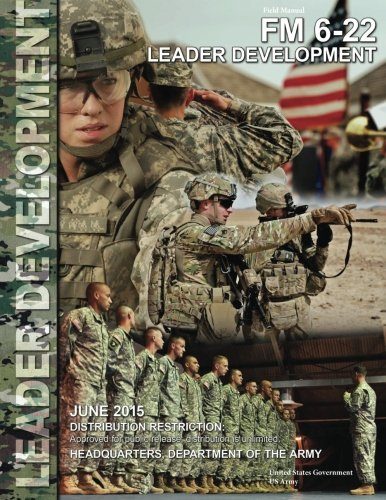
This publication, Field Manual FM 6-22 Leader Development June 2015, provides a doctrinal framework covering methods for leaders to develop other leaders, improve their organizations, build teams, and develop themselves....This publication, Field Manual FM 6-22 Leader Development June 2015, provides a doctrinal framework covering methods for leaders to develop other leaders, improve their organizations, build teams, and develop themselves.The principal audience for FM 6-22 is all leaders, military and civilian, with an application focus at the operational and tactical levels. Trainers and educators throughout the Army will also use this manual.Army leaders are the competitive advantage the Army possesses that technology cannot replace nor be substituted by advanced weaponry and platforms. Today's Army demands trained and ready units with agile, proficient leaders. Developing our leaders is integral to our institutional success today and tomorrow. It is an important investment to make for the future of the Army because it builds trust in relationships and units, prepares leaders for future uncertainty, and is critical to readiness and our Army's success. Leader development programs must recognize, produce, and reward leaders who are inquisitive, creative, adaptable, and capable of exercising mission command. Leaders exhibit commitment to developing subordinates through execution of their professional responsibility to teach, counsel, coach, and mentor subordinates. Successful, robust leader development programs incorporate accountability, engagement, and commitment; create agile and competent leaders; produce stronger organizations and teams; and increase expertise by reducing gaps between knowledge and resources.Leader development involves multiple practices that ensure people have the opportunities to fulfill their goals and that the Army has capable leaders in position and ready for the future. The practices include recruiting, accessions, training, education, assigning, promoting, broadening, and retaining the best leaders, while challenging them over time with greater responsibility, authority, and accountability. Army leaders assume progressively broader responsibilities across d